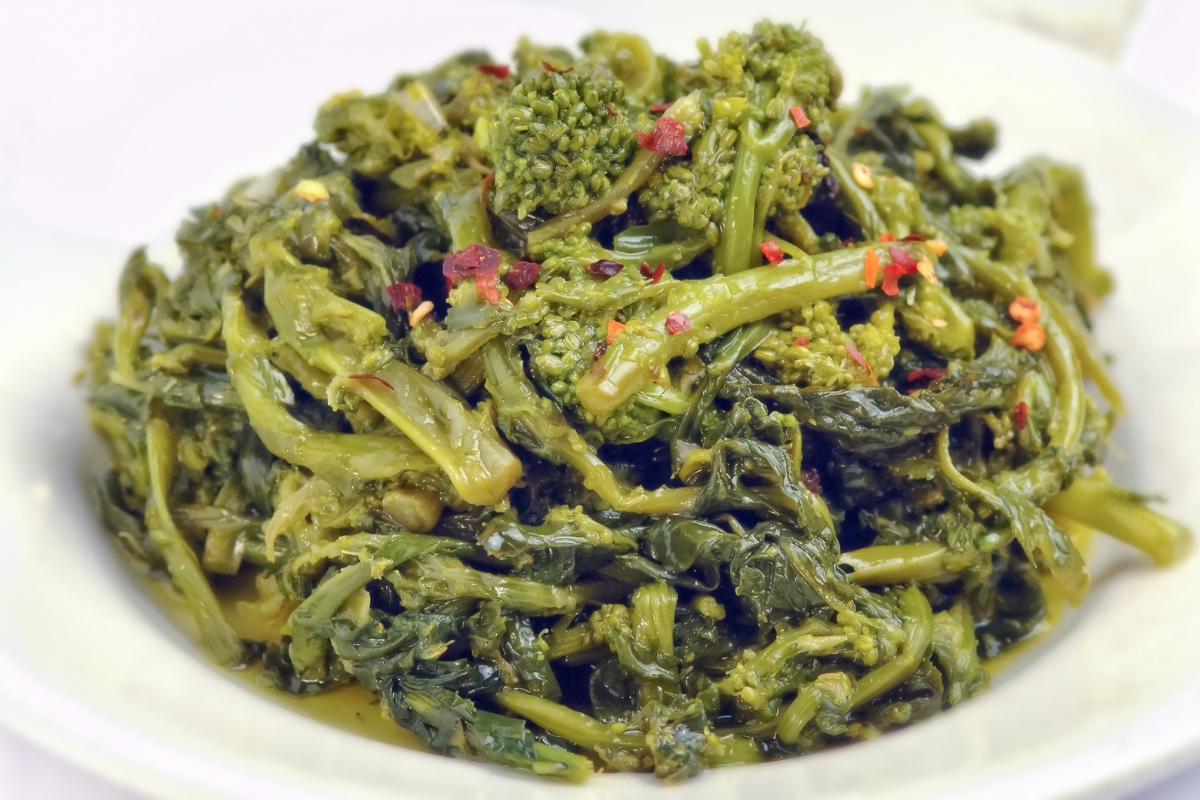
The flavor of brassica rabe varies depending on the plant it comes from, but most share a pleasant bitterness balanced with mild sweetness and earthy notes. Kale rabe tends to be slightly nutty, mustard rabe can be more peppery, and bok choy rabe is often milder and sweeter. Cooking softens the bitterness and brings out more rounded, savory flavors.
Texture is tender throughout. The stems are crisp but cook quickly, the leaves wilt into a soft, silky texture, and the small flower buds provide a delicate bite. Because these shoots are harvested young, they are usually more tender than mature brassica stems.
.png)
Brassica rabe offers many of the same nutrients found in other brassica vegetables. It contains vitamins A, C, and K, along with folate and fiber. These greens also provide antioxidants and beneficial plant compounds commonly associated with cruciferous vegetables. Since both leaves and stems are eaten, it delivers a range of nutrients in a single ingredient. Its bold flavor also encourages pairing with simple cooking methods that preserve nutritional value.
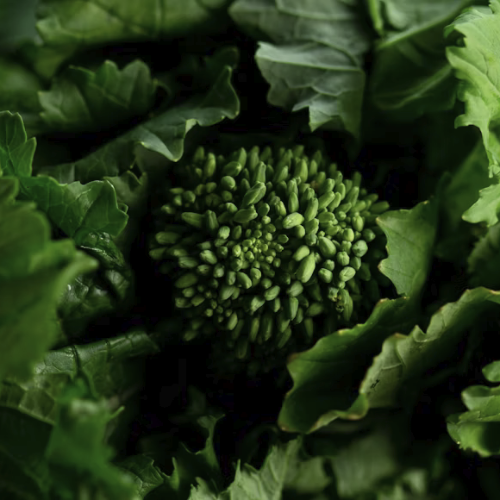
Brassica rabe, also known as raab or rapini, refers to the flowering shoots of brassica plants harvested before the blossoms fully open. At Green Heart Garden, the term is used broadly for the tender stems, leaves, and buds from crops like kale, mustard greens, bok choy, turnips, and other brassicas as they begin to bloom. Unlike broccoli rabe, which is a specific variety, this version can come from many brassica crops, each with slightly different flavors. These shoots appear as cool weather crops transition to warmer temperatures and offer a flavorful final harvest before the plants complete their lifecycle.