.png)
Every spring, there’s a point where the field starts to change almost overnight. Crops that made it through the winter suddenly shoot upward and start to flower. We don’t see this as a loss though, we see it as an opportunity for something new and different!
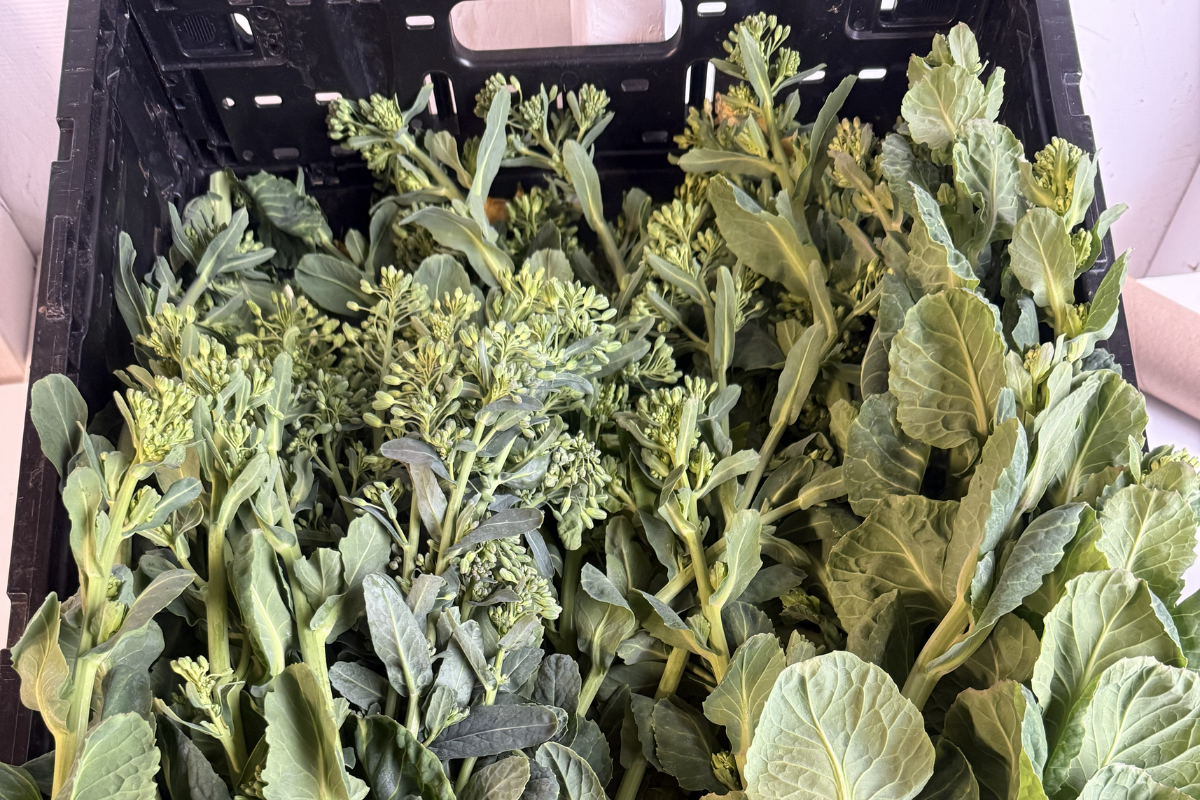
Around here, we use “brassica raab” to mean the tender flowering shoots of brassica plants before they fully bolt—kale, collard greens, Brussels sprouts, and others. And the truth is, raab isn’t always something we plan for. More often than not, it’s a bit of a happy accident.
We plant crops with the intention of harvesting them the usual way—big leafy bunches of kale, sturdy collards—but then we get a stretch of unseasonably warm weather. The plants respond by jumping ahead and starting to flower earlier than expected. Instead of fighting it, we lean into it and harvest the shoots while they’re still tender.
This year, that’s exactly what happened. Our overwintered kale started flowering right before the CSA season kicked off, so we’ve been able to share a lot of raab early on.
Raab is about as seasonal as it gets. It doesn’t last long in the field, and it doesn’t hold up well after harvest. There’s a small window where it’s just right; tender stems, soft leaves, and those little buds - and that’s when we pick it. CSA is all about getting what’s growing on the farm in real time, not what’s been stored or shipped in. Raab is a perfect example of that.
It also ties into how we grow food in a sustainable way. Overwintering crops helps protect and build soil, and when they start to flower, we’re able to get one more harvest out of them before moving on to the next planting. Nothing goes to waste, and you get some of the first fresh vegetables of the season.
Raab is a little more delicate than the full-grown greens it comes from, so it’s best not to let it sit too long.
If it starts to wilt, a quick soak in cold water can help perk it back up.
When it comes in from the field, raab doesn’t need much:
Some people like to blanch it briefly to take the edge off the bitterness. That works, but most of the time we skip it and go straight to cooking.
Raab has a mild bitterness that really works in its favor. It pairs well with rich, savory flavors and doesn’t need much to taste good.
This is the one we fall back on all the time. Olive oil, garlic, maybe a pinch of red pepper flakes. Cook until tender and finish with a squeeze of lemon.
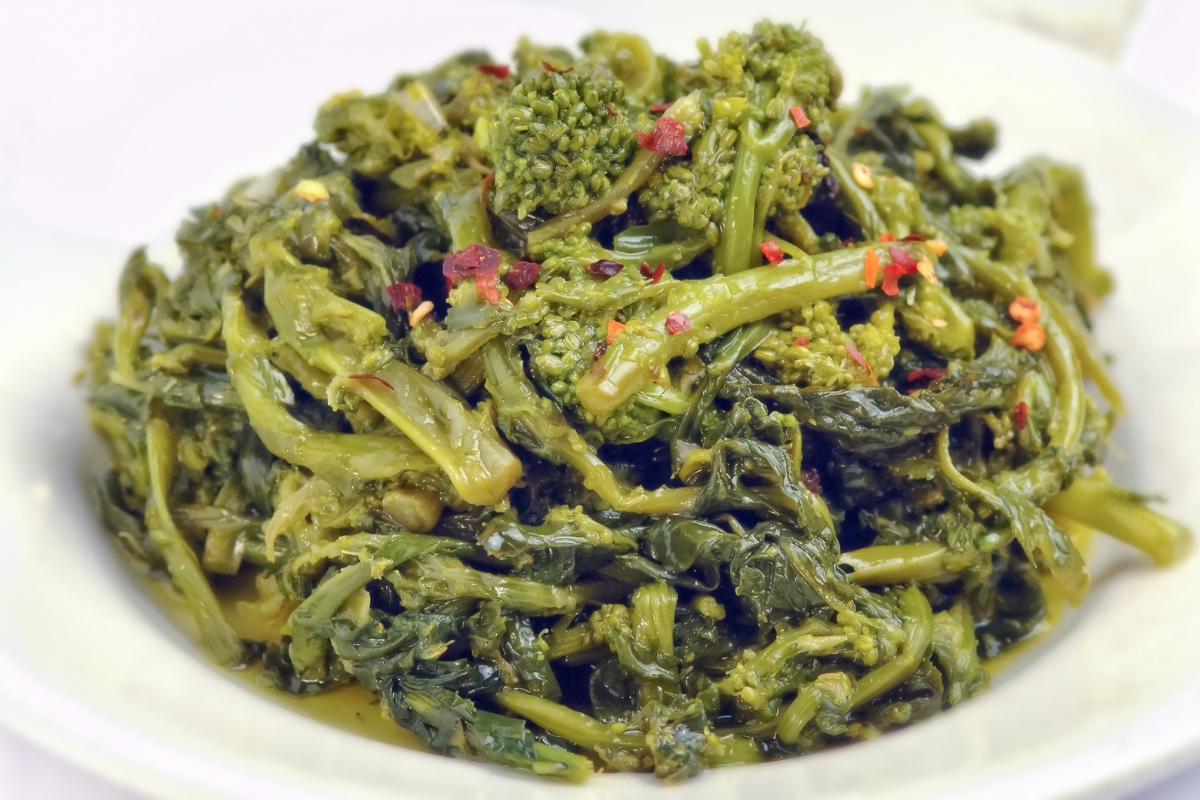
It’s especially good with eggs—scrambled, fried, or baked into a frittata. The richness of the eggs balances things out.
Chop it up and toss it with pasta, olive oil, garlic, and some grated cheese. Add sausage or white beans if you want to bulk it up. It would make a fantastic substitute to broccoli in this super simple week night recipe.
It fits right in with rice, farro, or whatever grains you’ve got, along with other roasted vegetables. Raab makes an excellent stand-in for asparagus in this bowl recipe.
Pile it onto toast with cheese, or tuck it into a sandwich for a little contrast.
Just like garlic scapes, raab doesn’t stick around long. Once those plants really get going and fully bolt, the texture changes and the flavor gets stronger. That short window is part of what makes it feel special.
It’s also a good reminder of what eating local produce is really like. Not everything shows up exactly as planned, and not everything is available all the time. Sometimes the best things are the ones you didn’t expect.
The start of CSA season always brings a mix of the familiar and the unexpected, and brassica raab definitely falls into that second category this year.
Spring shares are open now. If you want a chance to cook with ingredients like this - fresh, seasonal, and a little bit spontaneous - now’s a good time to sign up.