What Does it Taste Like?

Mushrooms are best known for their deep savory flavor—often described as umami—with earthy, woodsy notes that vary by variety. Button and cremini mushrooms are mild and familiar, while shiitakes lean smoky and robust, and oysters are slightly sweet. Texture depends on how they’re cooked: raw mushrooms are springy and moist; sautéed mushrooms become tender and silky; roasted mushrooms turn meaty with crisp edges.
Varieties we grow

Shiitake

Shiitake

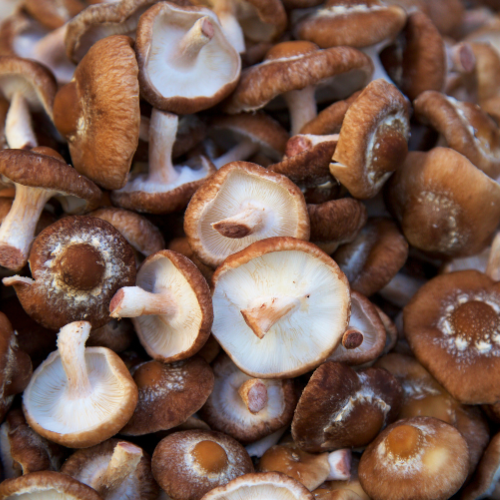
Broad brown caps with pale undersides and firm, meaty texture. Shiitakes have a rich, savory flavor with subtle smoky notes, making them especially well-suited for sautés, broths, stir-fries, and dishes where deep umami is key.

Why Should I Eat It?

Mushrooms are low in calories and fat while contributing meaningful nutrients. They provide B vitamins that support energy metabolism, along with minerals like selenium and potassium. Many varieties contain beta-glucans, which are associated with immune support. When exposed to sunlight or UV light, mushrooms can also supply vitamin D, a nutrient that’s harder to find in plant-based foods.
Mushrooms

Summer
Fall

Mushrooms live in the quiet space between vegetable and seasoning. They bring depth rather than brightness, turning simple dishes into something grounding and savory. A handful can shift the mood of a meal, adding richness without heaviness and complexity without fuss.

Recommended Storage

How Do I Store It?

Short Term

Store fresh mushrooms unwashed in a paper bag or loosely wrapped in a clean kitchen towel in the refrigerator. This allows moisture to escape and prevents sliminess. Use within 5–7 days for best texture and flavor. Avoid airtight plastic containers, which trap moisture.

Long Term

  • Dehydrating: Slice mushrooms thinly and dry until brittle. Store in airtight jars; rehydrate in warm water or broth before use.

How Do I Cook It?

  • Sautéing: Cook sliced mushrooms in a wide pan over medium-high heat with oil or butter. Let their moisture cook off before stirring too much to encourage browning and concentrated flavor.
  • Roasting: Toss mushrooms with oil and salt, spread in a single layer, and roast at high heat until browned and slightly crisp at the edges. This method highlights their savory depth.
  • Grilling: Skewer whole or halved mushrooms, brush lightly with oil, and grill until charred and juicy. Especially good for portobellos and large creminis.
  • Braising: Simmer mushrooms gently in broth, wine, or sauce. This keeps them tender and allows them to absorb surrounding flavors, making them ideal for stews and grain dishes.
  • Stir-frying: Cook quickly over high heat with aromatics. This preserves texture while adding browned notes, particularly effective for shiitake and oyster mushrooms.

What Goes Well With It?

  • Garlic: Enhances mushrooms’ savory qualities without overpowering their natural earthiness.
  • Thyme or rosemary: Woody herbs echo the forest-like notes in mushrooms and add aromatic balance.
  • Butter or olive oil: Fats carry flavor and soften mushrooms’ intensity, creating a rounded mouthfeel.
  • Soy sauce or tamari: Adds salinity and extra umami, reinforcing what mushrooms already do well.
  • Onions or shallots: Their sweetness contrasts with mushrooms’ earthiness and builds a strong flavor base.
  • Acid (lemon juice or vinegar): A small amount brightens and sharpens the overall dish, preventing heaviness.
Back to Top Arrow